Urban
Site type
Development
185
tCO₂ reduced
per annum
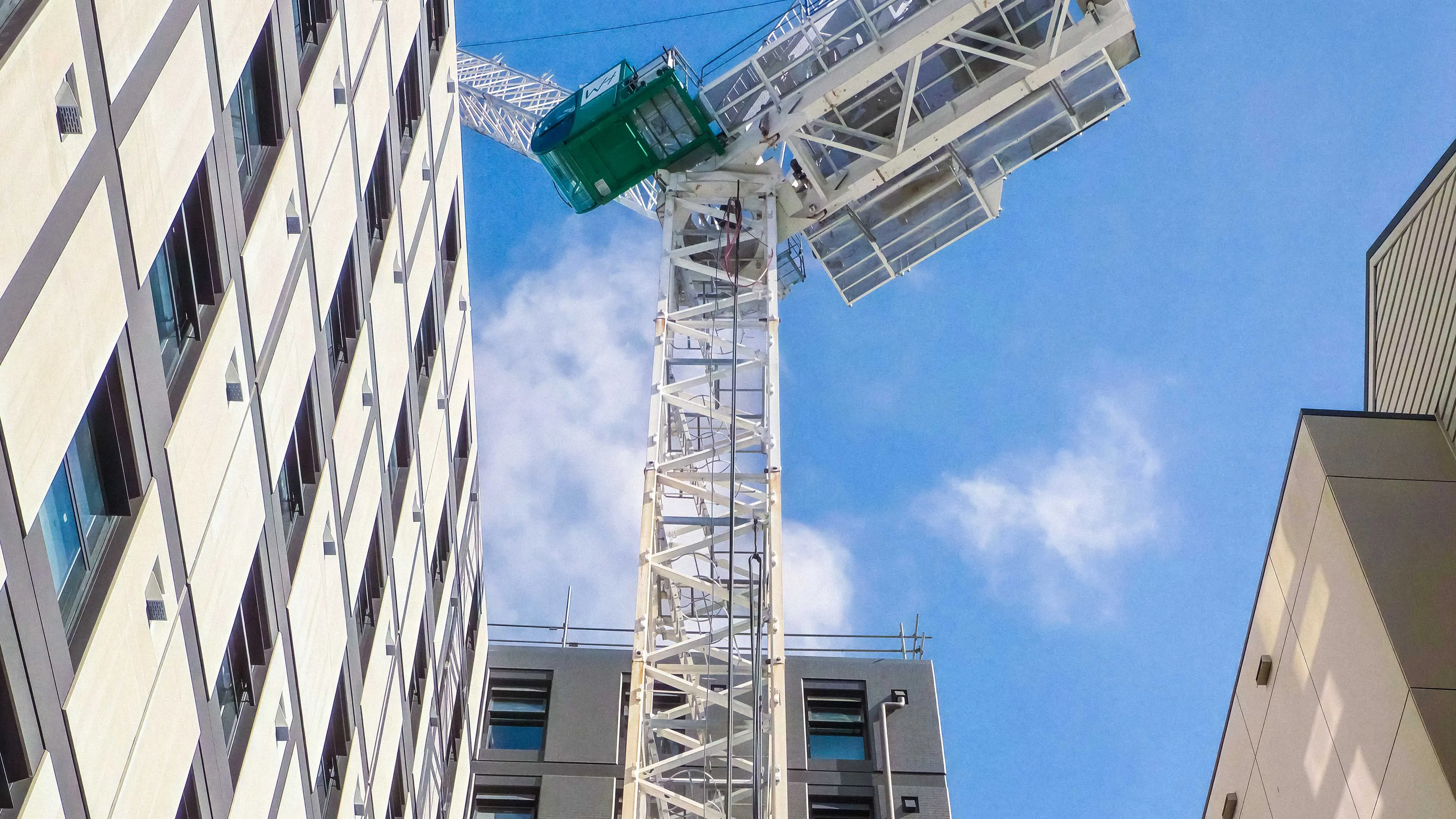
To address the noise and emissions problems caused by the generators, Watts & Hughes installed an CP300 in April 2023 to provide power to both the tower crane and the personnel hoist. The CP300 was set to only draw 16A from the general site power and was plugged into one of the site power distribution boxes.
The use of the CP300 system has had several positive results for Watts & Hughes. First, it has helped them reduce noise and emissions on the construction site, which has improved relations with their neighbours. Second, the CP300 system has provided reliable and efficient power to the tower crane and personnel hoist, which has improved productivity and reduced downtime. Third, the use of the CP300 system has helped them reduce their operational costs by eliminating the need for two diesel generators. Finally, the use of the CP300 system has helped them reduce their carbon footprint by over 185 tonnes annually.
Potain MCR 295 Luffing crane